

Space to be yourself
An interview with Australian trumpeter and composer Jessica Carlton.

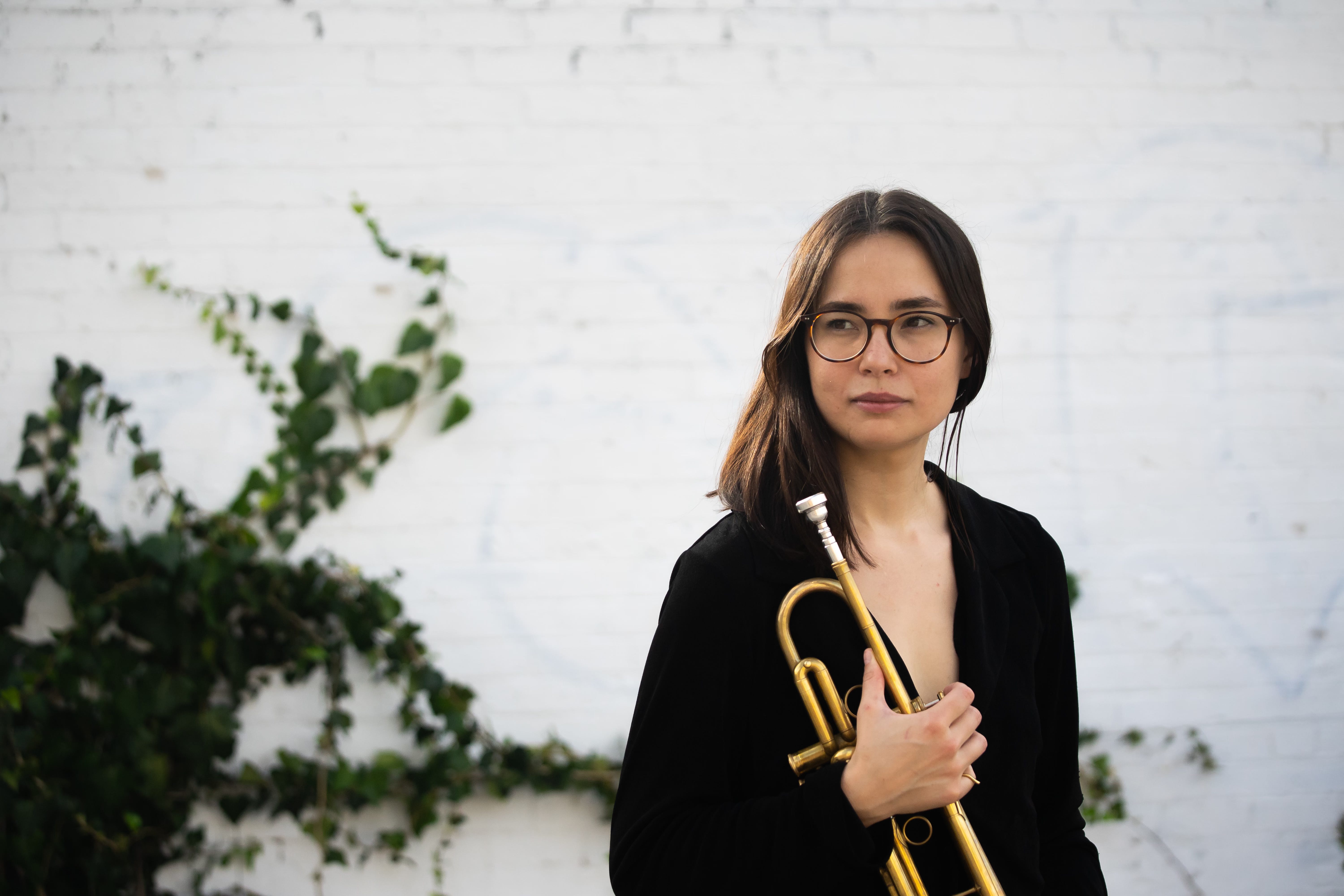
I first heard trumpeter Jessica Carlton in 2022 on Undeniable, an album by the leaderless quartet styled Carlton/Macpherson/Pass/Valenti. I was struck by the thoughtfulness of her improvising and intrigued by her compositions, which were inspired by the Chinese feminist movement. I had no sense of it at the time, but I was hearing an artist in transition.
Jess had recently given birth to her first child, Olivia, after moving to Perth from Melbourne. It was there, eight years earlier, that she’d released her first album, Not Alone (2014). Compared to the bristling jazz-rock tunes on that album, Jess’s compositions on Undeniable were more restrained and refined, reflecting her increasing comfort with space, as well as her deepening connection to extramusical sources of inspiration.
These elements coalesced into Jess’s mature style on For Olivia (2023), a clutch of compositions inspired by motherhood, and Ekphrasis (2025), her latest album and the artefact of her master’s research (which overlapped with the birth of her second child, Mei). “Ekphrasis” is an academic term that, in this context, denotes a musical depiction of a literary or visual artwork. Each of the six compositions on the album recreates a poem or painting with special resonance for Jess. The result is her finest work yet; musically sophisticated, but also alive with empathy and curiosity.
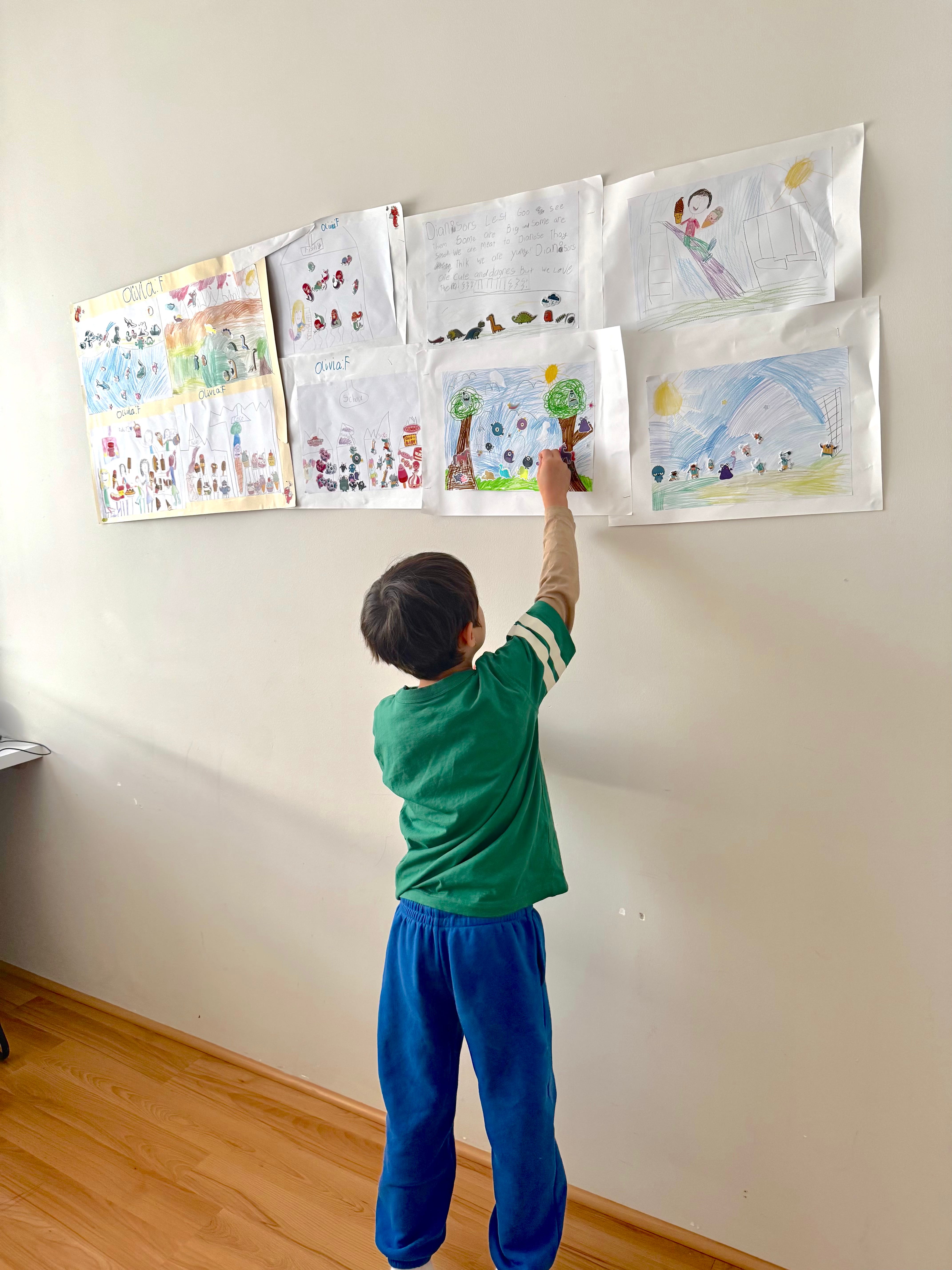
Last month, I had a wonderful chat with Jess about her evolution as an artist and a person; her framework for ekphrastic composition; her burgeoning PhD research on neuro-affirming practice in jazz education; and the profound impact of motherhood on her life and career. Every now and then we broke from our conversation to admire the artwork that Olivia was crafting nearby (Dinosaur Sweet Monster World, 2026, Texta, pencil and stickers on paper).
I listened to Not Alone for the first time the other day. Have you listened to it recently?
I haven’t listened to it recently. I think I was 21 when I recorded it, in my second year of studying jazz at Monash. Looking back, I don’t know if it was a smart decision to record something at that age, but I was really trying to figure out myself as a composer and musician.
That year, or just before that year, I really figured out what kind of music I liked. Obviously I’d loved music my whole life, but it was like this switch in my head that year where I realized, “Oh, this is what I really like.”
And what was that?
It was a lot of AlasNoAxis—Jim Black, Chris Speed—that was the starting point. Also a lot of musicians from Melbourne, which is where I was at the time. I realised how much I loved improvised music but not, I guess, traditional jazz—which I also like! But this stuff just really resonated with me, and that’s when I started writing music inspired by it.
My composing style has developed a lot since then—I really was so new to composition. But it was also good for me, to throw myself in the deep end and figure out what I wanted to do musically.
I think, as musicians, we need to accept that any recording we make is a snapshot of that time of life. In terms of my composition techniques and trumpet playing, I had a lot of work to do. But, when I listen back, there’s still something that I feel proud about, in that I was establishing myself as a musician, and figuring out my own voice.
What struck me most about Not Alone is that it’s guitar-driven and texturally quite dense, which are not things I associate with your music now.
I think that’s because I was listening to so much AlasNoAxis, which is quite rocky. I’d just discovered that improvised music didn’t have to be jazz standards. Also, when you’re younger—or, at least, when I was younger—there’s a bit of a fear of space. You want to fill it up as much as you can. I felt quite scared of improvising when there wasn’t much going on around me, which now, in my older age [laughs] I’ve really learnt to embrace. Now, I really like space. But it can still be scary as well.
You can definitely hear that on Not Alone; there are spacious moments, but it feels like the music never wants to linger there.
The other thing is… I was so inexperienced when I made that album. I wrote all of this music, spent a lot of time writing it, a lot of time thinking about what I wanted the band to play. And then obviously there’s all of the administrative details, getting the money together—all of that stuff. Then I got into the recording studio and I was like, “Whoa, I have not been practicing trumpet very much”. I was so stressed about all of the other elements that I hadn’t been thinking about my role as a musician. So that was a big learning curve for me; to figure out how to balance all of those things.
There’s an eight-year gap between Not Alone and Undeniable, which was the album I first heard you on. What was happening for you during that time?
When I graduated from Monash, I was having a bit of a hard time in my life. I think I just needed a change, so I moved to New York, because at the time I had a partner who was American.
I was still engaged with music and went to a lot of gigs when I was there, but I didn’t really play very much. There was a lot of self-consciousness about myself as a musician, but I think I also just needed to figure out myself as a person. I started, but didn’t finish, a master’s in social work, and I was thinking about going into that, because I’ve always been interested in psychology.
I was in New York for about two years. Then my relationship ended, and I felt kind of like I was done with America. Trump had also just been elected for the first time—I went to the Women’s March in New York. Things were feeling very intense.
Did you see any gigs in New York that have stayed with you?
I saw a lot. I was young, so I had lots of energy. I was going out a lot, which is what people do in New York; they don’t really stay in their apartments. You just go out and see music all the time. So, yeah, I mean, it’s hard to even name someone… I saw Bill Frisell, who I love, and that was really cool. But it was probably hundreds of gigs that I saw, so it’s hard to name specific ones.
I was also still figuring out what I liked. You could see so much—like literally three gigs on one night—and I was just kind of taking in everything and figuring out what my style was; what I was drawn to. I didn’t really know if I was going to return to music, but looking back now, I think it all had an influence on me.
I guess refining your taste is an important part of developing as a composer, because you need to have a sense of what you want to do before you can do it.
Listening is so important. I tell my students to think about it like writing a book; you can’t just sit down and write one without having read anything first.
So what happened after you decided that you were done with America?
I felt like it was time to go back to Australia but, when I arrived back in Melbourne, I felt really confused. I was very disconnected from the music scene; things had changed since I left. I didn’t really know what I was going to do.
I was a bit of a lost soul. I ended up doing a little bit of a literature course—I was really just exploring. I mean, my love for music always was there, I just spent a lot of time feeling like I wasn’t good enough, and that really stopped me from going back to it. That’s something I still battle with today.
Then I moved to Perth and had Olivia. While I was pregnant, I wasn’t able to do much, because I was really sick; I had hyperemesis. I’d been teaching trumpet, but had to quit that quite early on in the pregnancy. I couldn’t really engage with much of what I enjoyed doing.
Even though that was really hard, it was a pivotal moment in my life, because it made me realise what I actually wanted to do. It’s like, when you can’t do something, then you realize how much you want to do it. I was just really craving playing music with other people, listening to more music—all of it. I found it really hard to play trumpet while I was pregnant, so I played a lot of piano, and that brought out again my love for composing, because I write a lot on the piano.
I actually did my first gig back when Olivia was only three months old—which was hard as well, in its own way. But I was super keen to get back into it. And since then, I think I’ve done the most amount of improving and growing as a musician; in the last seven years, since Olivia was born.
You mentioned composing on the piano. Is that how you composed the music on Not Alone?
Yeah, I did write a lot on the piano then as well. The main thing that sticks out to me about my music from that time is that a lot of the tunes have these small sections… I think because I was new to composing, I was writing these chunks and then struggling to connect them. That’s something I’ve worked on over time. It used to be that I would write a chord progression and think, “Oh, that sounds nice… Now what?” Whereas now I conceptualise a whole piece, in an overarching way, and then work out the details.
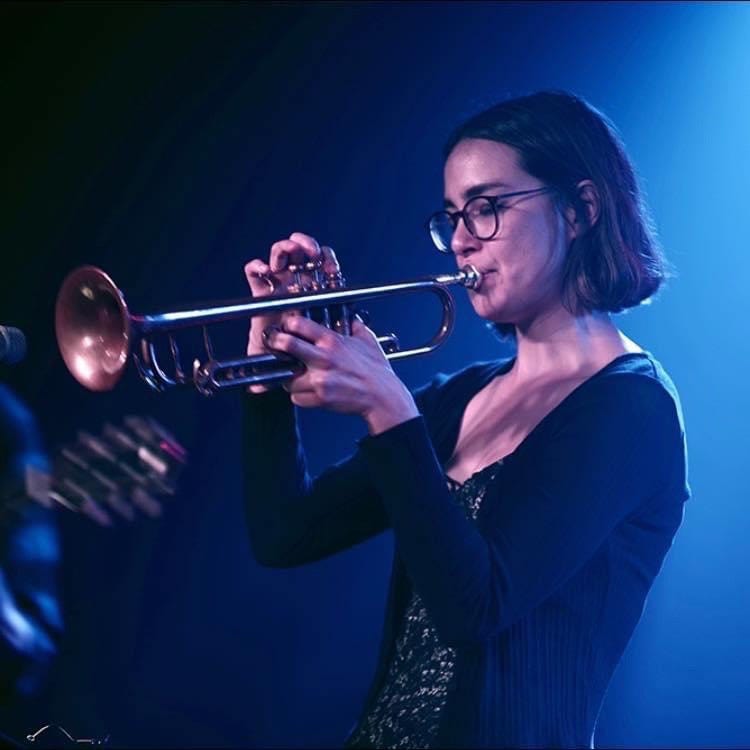
In your master’s thesis you write about how, after Olivia was born, you adopted a more “project-focused” approach to composing. Can you talk a little bit about that?
I think it relates to what I was saying about spending time exploring different avenues and figuring out what I wanted to do in life. I guess I came to the realization that those things don’t all need to be separate, and I don’t need to make these black and white decisions of “I’m going to do this and not this”.
As I said, I’ve always been very interested in psychology and mental health because of my own experiences with that. I love reading; as a child, reading was my big escape. I’ve always loved visual art as well, and I dabble in lots of arts and crafts.
I knew that I wanted to do music in a different way, because how I’d done it in the past hadn’t felt good. I’d been trying to fit some kind of mold that I thought I should fit into, and feeling really unhappy about it. I felt really terrible after every single gig I played, because I felt like I wasn’t good enough; like I wasn’t doing it right.
So when I came back to music after having Olivia, I thought, “How can I do this without feeling that way again?” And that really came down to finding ways to create music that felt good, that resonated with me, and aligned with all of my different interests and values.
Another big part of it, which has also been a learning curve over the years, is who I play with. And the spaces I play in, as well as the music that I’m playing. Those are three things I really consider now, every time I’m thinking about doing a gig or a new project.
I think a lot of musicians will ask, “How much does it pay? Who is it with? What’s the music like?” And if it fulfills two of those, then it’s worth doing. For me, because I’m autistic, I have a lot of sensory challenges and social challenges, and I’ve realized over the last few years that they can take a massive toll on me that is hard to recover from. So, for me, it’s really just not worth it at all to do anything that doesn’t align—like, if the people don’t feel like safe people, or the space is not a safe space to play in. That’s what I’ve realised over the last few years, and it’s been difficult to get to that point.
When you’re a young musician, you’re taught to take every opportunity that you get, and I’ve really had to unlearn that. I think doing that when I was younger helped me, in many ways, get to where I am now. But I know now that I just can’t do that anymore.
In light of your more recent work, your compositions on Undeniable seem kind of transitional; moving towards a different style that’s not fully realised yet.
I was starting to draw together all my different interests; to think about “extramusical” things as part of the music. I was reading a book called Betraying Big Brother, which is about the feminist movement in China—I have Chinese heritage, so I was trying to learn more about China, while also engaging with my feminist values—and these moments kept popping up in the book where they would talk about music; the girls involved in the movement had songs that they would sing together. So I started to think about how I could create music inspired by those people; by that movement. I wrote a bunch of tunes—there were a few more that didn’t make it onto the album.
But compositionally, I agree with you: those tunes were the first project-based music I wrote, and I was still definitely figuring things out. I was heading towards the style that I write in now, but not quite there.
I’m wondering how, back then, you were trying to connect your music with those extramusical ideas—were you drawing on your emotional response to them?
For those tunes, I actually drew on some Chinese folk songs. You can’t really tell from just listening, but that was an important part of the process.
This is what my master’s thesis was all about: connecting extramusical ideas to music. It’s definitely not one-size-fits-all; everyone’s going to do it differently. Through my research, I discovered that, for me at least, it’s a question of figuring out a balance between literal translations and more abstract, emotional ones.
I’d love to hear more about your research, and how you came across the concept of musical ekphrasis.
I didn’t go into my master’s research with a fully formed idea. I submitted an application that was broadly about extramusical influences—life experiences, or even political movements—and how they could be translated into music. After my experience writing for that project we just talked about, I wanted to know how I could do it better; how I could make things more connected.
I quickly realized that topic was way too broad, especially for a master’s thesis. So I did a bunch of research, and narrowed the extramusical influences down to literature and visual art. And then one of my supervisors found an article about musical ekphrasis, and was like, “Maybe this would be of interest to you.” And I was like, “Hmm… This is of interest to me.” [laughs] And then I shifted my focus to the concept of musical ekphrasis specifically.
I interviewed jazz musicians who had worked in this area in the past, and I managed to speak to some really heavy hitters: Andrea Keller, Jane Ira Bloom, Jason Moran and Dave Douglas. I felt extremely nervous interviewing them. When I spoke to them, I was still unsure about how the project was going to take shape, and then they gave me so many amazing ideas. So that was the starting point, and the rest of my research involved using their ideas; trying to compose in the different ways they’d suggested.
Another big part of the project for me was selecting the poems and artworks. I really wanted to focus on female-identifying writers and artists, especially ones who are mothers, because that’s obviously something very personal to me that I connect with.
Can you explain what distinguishes the concept of musical ekphrasis from the more general concept of composing music “inspired by” another artwork?
The concept was adapted from literary ekphrasis, which refers to a literary description of a visual artwork. Siglind Bruhn, the musicologist who wrote the article I mentioned before, was using the term “musical ekphrasis” in the context of classical music to describe a musical translation or re-presentation of a work of literature or visual art. So it goes beyond just initial inspiration and involves translating specific elements of artistic meaning or process into music.
One of the process works on the album is “Remnants”, which was based on an artwork by Eveline Kotai. Part of the original work is on the album cover. Eveline’s process was creating that original work and then cutting it up and stitching it back together. So I translated that process by composing musical content that I cut up and stitched back together.
Let’s talk about your process in more detail using “Remnants” as an example, because the ekphrastic connections you made there are particularly striking. Once you choose an artwork, the next step is immersing yourself in it. Then—and this seems to be a key difference between this process and how you’ve composed in the past—there’s a “pre-composition” phase, where you brainstorm potential connections between artistic ideas and musical ones.
Yeah, so for “Remnants” the original melody I wrote was the longest version that you hear. You only hear a bit of it to start with, then a little bit more. Then you hear the whole thing. Then you hear it again with a different bass note. You also hear it at three different tempos.
So, in this case, the melody I originally wrote didn’t come from looking at the artwork. But the whole idea, conceptually, of the piece, came from learning about Eveline’s process for creating the artwork; I never would have had that idea if I hadn’t learnt about her process.
The idea of all this is not that any musician who saw the artwork would somehow write the exact same piece, but that this ekphrastic approach provides you with different starting points and different conceptual ways into composition.
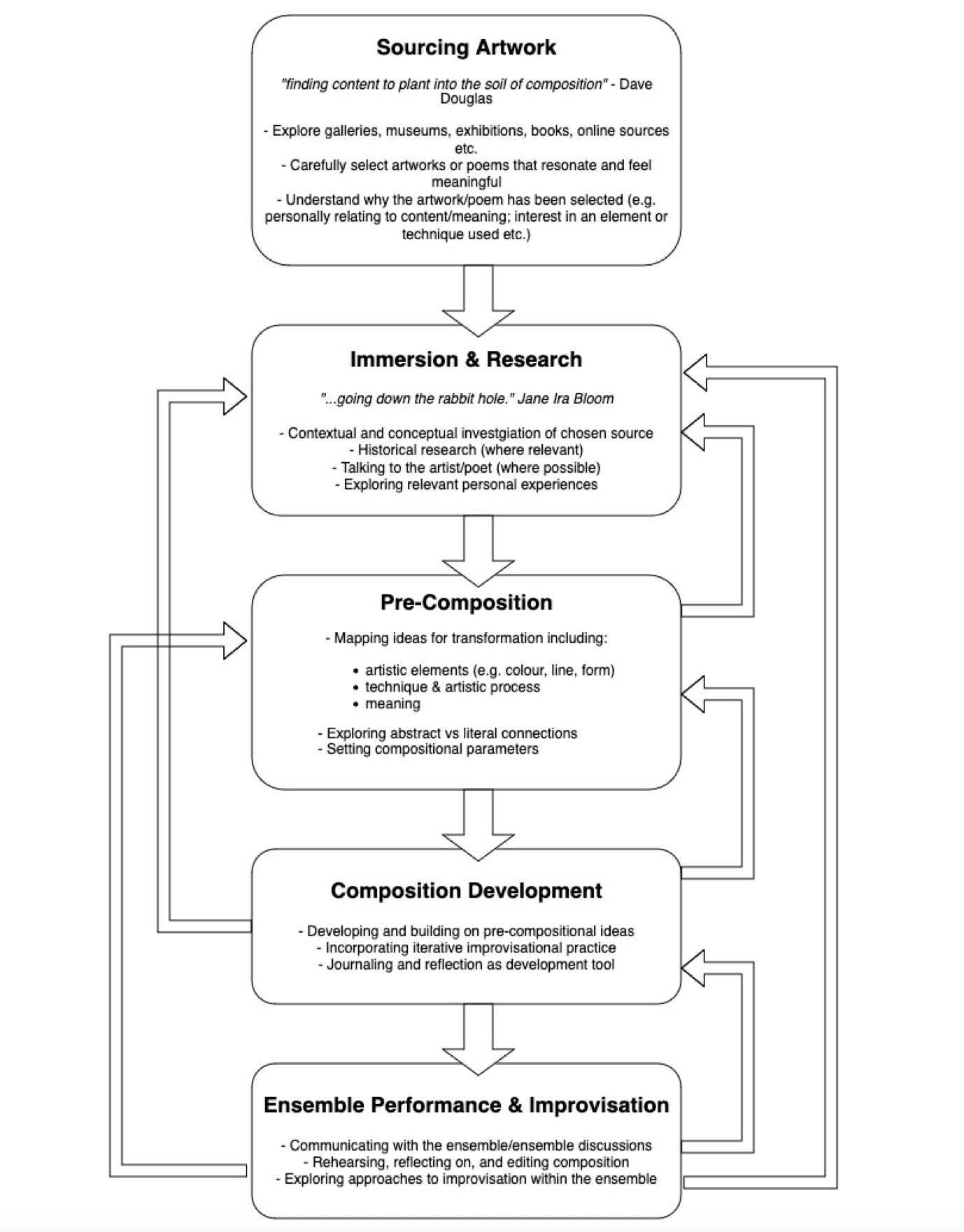
One thing that stood out to me in your thesis was an insight that you got from Andrea Keller; that sometimes you want to make more abstract connections. That seems related to what you were just saying, because you wouldn’t want your piece to be overdetermined, with every aspect of it having to link directly to the original artwork.
Yeah, exactly—so that’s where you’re looking for balance, and using your musical intuition as well. Because, obviously, no composer is working in a vacuum; they’re composing from their whole life history and their musical influences and all that stuff. So anyone who uses the framework that I created is going to have different results. Which is good! You wouldn’t want everyone to write the same thing.
Speaking of not wanting to overdetermine things, the last step of your process involves taking your composition to a band of improvising musicians. Obviously, you’re not going to tell everyone exactly what to play for the duration of each piece. Can you talk about how that last step played out for “Remnants”?
If you listen to the track, you can hear that I ended up using a lot more of the melody fragments in my solo than anyone else did. That was my choice; I was viewing the music through an ekphrastic lens. But, as you said, I didn’t want to tell everyone else what to do. I wanted to create a composition that’s a vehicle for improvisation and then let the musicians be themselves, which is what we all love to hear.
I did share the artworks and poems with the band, but I didn’t tell them how much they had to engage with them, or even that they had to look at them. It was just like, “Here it is, if you’re interested.” Jamie knew a lot more about it all than anyone else, because he was my supervisor, but I know some of the others also looked at the artworks and read the poems.
Rehearsing is really part of composing. When you finish writing the notation at home, that’s never the end point—I mean, there’s never really an end point with improvised music. But when you bring it into a rehearsal, other people contribute ideas.
With “Remnants”, we did discuss the artwork and Jamie made a comment that it reminded him of coding. His comment led us to the concept of switching codes, expressed as tempo changes led by the bass, and the idea of parallel lines of code, which ended up informing the solos; when Jamie starts soloing he is playing in time with the bass but against the drums and piano, which are in time with each other.
I want to talk about “Heritage” as well, because it’s my favourite track on the album, and I get the sense that it has really resonated with other people too. I saw you play it with Holly Moore at the Perth International Jazz Festival last year, and she talked about how much she loved it.
That one’s based on an artwork by Bori Benkő, who lives in Fremantle. She’s also a mother and she made—or maybe is still making—a series of works about her relationship with her child. “Heritage” is essentially a silhouette of a mother figure and a child figure.
I actually wrote the melody while I was in hospital because of a complication with my pregnancy. Bori had just recently sent me an image of the artwork, and I was kind of thinking about it, and this melody came to mind—not exactly as it is now, but the initial idea of it. So I recorded it as a voice memo, thinking “Please no one walk in while I’m singing” [laughs].
And I was really thinking about—I guess this is where the emotional connection and intuition come in—my connection to Mei, who was still in my womb, and my connection to Olivia, and the image of the artwork.
And then from there, I worked on the more literal connections. I looked at the composition of the artwork—it’s divided into two sections—and the limited colour palette. I translated those elements into two distinct voices: melody and bass. Obviously not everyone is going to have the same interpretation, but to me the bassline is the parent and the melody is the child and you hear them working together, with the parent always supporting the child.
I was also thinking about lullabies and other songs you might sing to a child, so I wanted to keep things relatively simple.
That simplicity might be what resonates with people. How do you feel generally about the response to Ekphrasis and the impact of this change in your process?
It’s definitely helped me to mature as a musician and a composer. And at the end of the day, you want to be playing things that you feel emotionally connected to, and the idea of an audience connecting emotionally to it … I never get used to people coming up to me after gigs and talking to me about my music and saying they connected with it. It feels like such a privilege; that someone just sat there and listened to my music and engaged with it. That’s such a beautiful feeling, and I never expect that it will happen; it’s always a surprise.
I don’t expect people to have a specific reaction. I want people to engage with my music however they feel—I think that’s kind of the point of art. If someone has an emotional response to it, that’s really nice, and I love hearing about it. But I fully expect that there’ll be people in the audience who don’t connect with it at all, and that’s fine—no one can make art that connects with every single person. The main feedback I’ve always gotten is that, when I talk about the stories behind the tunes, that helps people a lot to connect with the music.
At your last gig at the Ellington, before you played “Caterpillar”, you told the origin story—watching your daughter become fascinated with a caterpillar in your garden, that experience of seeing the world through a child’s eyes—and I saw mothers in the audience smiling with recognition.
I actually had a couple of people come up to me afterwards and talk about that tune specifically, which was lovely because I don’t play it very much.
I definitely had to get used to—actually, no, I’ve never gotten “used to” talking on mic—but I had to learn to do it because I think it really does help. I’m often performing to people who don’t already know my music, and there are no lyrics, which sometimes help an audience to engage with a story. So I feel like it helps them connect more with the music if I can talk through where I’m coming from compositionally before I play it.
It also helps remind me why I wrote it, and then be in that moment when I’m playing it. Sometimes I haven’t communicated the story with the band before either, due to limited rehearsal time or because it just hasn’t come up. So when I say it onstage, I don’t know if it helps them musically, but at least they then know where I’m coming from.
I know that, when I’m playing in other people’s bands, I love it when they tell the story of how they composed a tune—it makes me think and feel differently about it.
If you hear a story for the first time like that, onstage, do you try and hold on to it in some way as you play the tune?
It definitely stays in my mind while we’re playing it. I don’t know that it can instantaneously impact how I improvise, because so much of that is skill-based and practice-based. But it influences how I feel about playing it, which can probably come across in expression.
It’s a bit like what you were saying before; that, regardless of the “extramusical” source material, your experience and intuition are always going to play a role in your composing. I think Andrea made the point in your interview with her that, ultimately, she always wants to be composing in her own voice.
I think that’s also unavoidable; you’re always going to sound like yourself. Even when you listen to Not Alone, you can tell I’m a very inexperienced composer, but there are still elements of the way that I compose now.
I’ve just realised that we skipped over For Olivia, which seems like a significant milestone in the evolution of your style.
Writing the compositions on For Olivia was a pivotal time in my musical life, because it was really when I accepted, “This is the kind of musician I am; this is how I want to improvise.” I stopped—well, not totally stopped, but moved away from—feeling shame about that, and feeling like I had to play in a more “jazzy” or complex way. I just really embraced that this was the music that I was hearing.
With all those compositions—except maybe “Birth of a Mother”—I really embraced simplicity, which is, I think, a priority for me as a composer and musician now. So that was a big thing for me, personally; to put out into the world, “This is who I am.”
I think you can really hear that—like, if you listen to “Not Alone”, the track, and then to “Naybe” from For Olivia, everything sounds much more comfortable and cohesive.
I used to feel really worried about bringing in so-called “simple” tunes to a band. What if they got bored? Or wanted more to be going on harmonically? And I’ve literally never had that experience with anyone I’ve played with. Some of that probably comes down to who I’ve chosen to play with, but everyone has been so open to it. I mean, I don’t know what they’re really thinking, but I’ve never felt like anyone’s been bored with the music—they’ve put a lot of effort into using their own musical voices to interpret the compositions.
That really comes through on Ekphrasis. I think “Heritage” is my favourite track partly because it’s such a strong example of that; the materials are relatively simple, and everyone is able to use them to express themselves so effectively in their own style.
Yeah, I mean, when you listen to my solo and then Jamie’s—they’re so different.
And then you’ve got Harry’s beautiful playing on the outro as well.
I like to create music that has enough space for people to be themselves. Obviously there’s many different ways to compose, but I know that, as a musician, I love to play music that has that kind of space that allows you to express yourself.
Can you tell me a little bit about your PhD research?
I’ve just started, but the general idea is neuro-affirming practice for learning and teaching jazz. It’s a topic I’m really passionate about because, like I said, I’m autistic and I have ADHD as well. One of my children is also autistic, so that’s been a massive part of our lives since we both got diagnosed around the same time.
As an autistic person does, I really dove deep into research about autism and neurodivergence and honestly… We were just talking about For Olivia being a musical turning point—it was because of this diagnosis as well, because it helped me see and embrace who I am, which was life-changing.
So it’s become something I’m really passionate about; making sure that neurodivergent people have the right support and accommodations, and working towards more inclusivity for neurodivergent people. I look at it through a neuro-affirming lens: there is nothing inherently wrong with us, but we live in a neurotypical society, which makes it difficult, in many ways, for us to live. And so we do need these supports and accommodations.
Some things are so simple, like asking venues to turn down the lights when I’m performing, which now they do in certain venues when they know I’m onstage. And that is literally a free, very, very easily implemented accommodation. Sometimes people think of disability support and accommodations as expensive and difficult, but what I try and spread around is that they don’t have to be—there just needs to be some thought behind it.
I can see Dr Devon Price on your bookshelf, and one of the things that their writing has made clear to me is the extent to which those accommodations—which, as you say, are not necessarily difficult to implement—actually end up benefiting everyone.
Yes, exactly. The example I often use is a wheelchair ramp. A wheelchair user obviously needs the ramp to get into the building, right? But, if you build the ramp, it will also help mothers pushing prams, people carrying large loads—accommodations that are made for people with disabilities positively impact everybody. That’s obviously just one example, but I really believe that if the world was more inclusive and neuro-affirming, it would benefit a lot of people—especially because there are a lot of people who are undiagnosed or aren’t able to access diagnostic assessments or supports.
Personally, I’ve had a lot of struggles learning jazz within educational institutions. I didn’t know that I was autistic when I went through undergrad, but I think it would have been a massively different experience if I had known, and there were supports and accommodations in place for people like me.
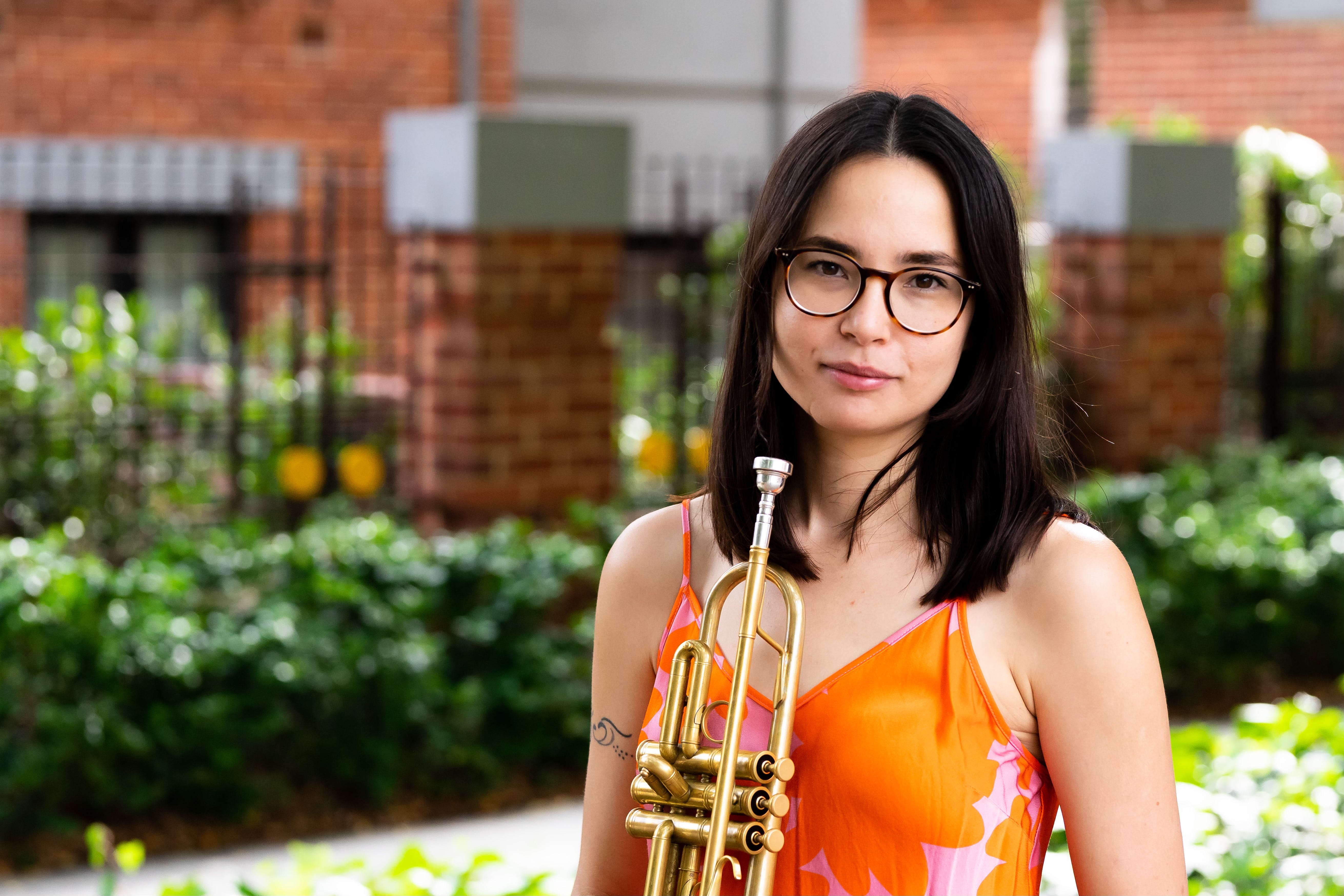
Before we wrap up, is there anything else you’d like to talk about?
The only other thing that I feel like has been a massive part of my journey as a musician is becoming a mother. I feel like I can’t go through an interview and not talk about that more. There are a lot of jazz musicians who are parents, but there are less mothers because of the gender imbalance in jazz. So I feel like it’s something that should be talked about more because, even though I believe in equal parenting, there’s still inherently a massive imbalance—like, I was the one who had to be pregnant, and give birth, and recover from that, and breastfeed—and all of that stuff impacts your career in really significant ways.
But also, for me, it has been a massive part of me becoming the musician I am today; the person I am today; the teacher I am today as well. When I was younger, even when I was teaching, I was always thinking about myself—I wanted to be a better teacher, but I was still centering myself. Then I became a parent and, especially when they start going to school, and you see their interactions with teachers… It just hugely changed how I approach teaching, because I’m thinking about the student’s experience a lot more, and the role that I’m playing in their life.
One big thing that I’ve thought about a lot is that, when I was younger, and I had a student who wasn’t speaking much to me or outwardly didn’t seem engaged, I would worry that I was doing a bad job, or think that they weren’t interested in music. But now, through the lens of parenting and being neuro-affirming, I’ve realised that every child—every person—just experiences the world so differently. I’ve seen my child take a music lesson and, outwardly, appear unengaged, but then later be so excited about it and have retained everything. So that’s really made me think differently.
My trumpet playing and improvising have also improved the most in my years of being a parent, which seems so counterintuitive because I have way less time.
I’m interested to hear more about that, because the trumpet is such a demanding instrument; you have to do so much work just to maintain your technique.
It is difficult to maintain consistency, especially if, for example, the kids get sick and I have to give them even more of myself. But overall, it’s made me way more efficient with my time. If I have half an hour to practice, I can get a lot more done in that time now than I used to when I was in my early 20s.
I do have to do a lot of technical practice, but being able to learn away from the instrument has been a big thing for me. Part of it is probably just maturing and getting older, but I do think that becoming a mother has made me use my brain differently.
It’s also had an impact on my career, because I’m really motivated to show my children that I’m not “just” a mother and there are so many other parts to me. I’ve tried to bring them along to gigs that are at an appropriate time, so they can see that I do other stuff and I’m not totally defined by mothering. I mean, it is the biggest part of my life, and always will be; being a mother is the job that I take most seriously in my life, and the thing that I love most in the world. But there’s also lots of other parts to me, and I think it’s important that they see that.
Definitely. When you were talking about your trumpet playing just then, it reminded me that I really noticed a difference in your sound on For Olivia compared to Not Alone and even Undeniable. To my ears at least, there’s a greater depth and warmth to it.
I do have a much better understanding of the technical requirements of playing the trumpet. Sound has always been important to me, but in the last few years I’ve worked out specific routines and exercises that work really well for me. The trumpet is such a physical instrument, and everyone is different. Even when I teach, it’s very much: “Here’s all this stuff, but you need to figure out what works for you.”
But it’s interesting that you say that and that you could hear that, because I feel like, in the last few years, I’ve really… I’m not sure how to express it, but I’ve changed the way I think about the instrument and started to play it more like an extension of myself, rather than this totally separate thing that’s really difficult to play. A lot of that has come from breathwork and thinking more about how I use my air, but I think it also comes from really respecting music and the instrument.
I try to tell my students, “You should care about everything that comes out of your instrument”. It’s like that thing that people say, “Whatever you say, you believe”, right? I think that can be applied to playing an instrument.
One last thing before we finish: who have you been listening to recently?
A lot of the Lovano/Frisell/Motian trio, Andrea Keller and other Australian jazz musicians.
One musician I’m very influenced by is Jakob Bro. I love all of his music. Balladeering, Time, and December Song are older albums with Lee Konitz, and his newer ones feature trumpet players, Ave Henriksen and Palle Mikkelborg, who I really like as well. Getting into Jakob’s music has really helped me learn to embrace space and simplicity.
There’s a video about the making of one of Jakob’s albums where Lee Konitz talks about how, as he’s gotten older, he’s found himself playing long notes and playing less, and how much beauty there can be in that. That’s something I think about a lot.
i just got around to the interview!! loved it :)
Great interview! Excited to hear what Jess does next 🎺🎉